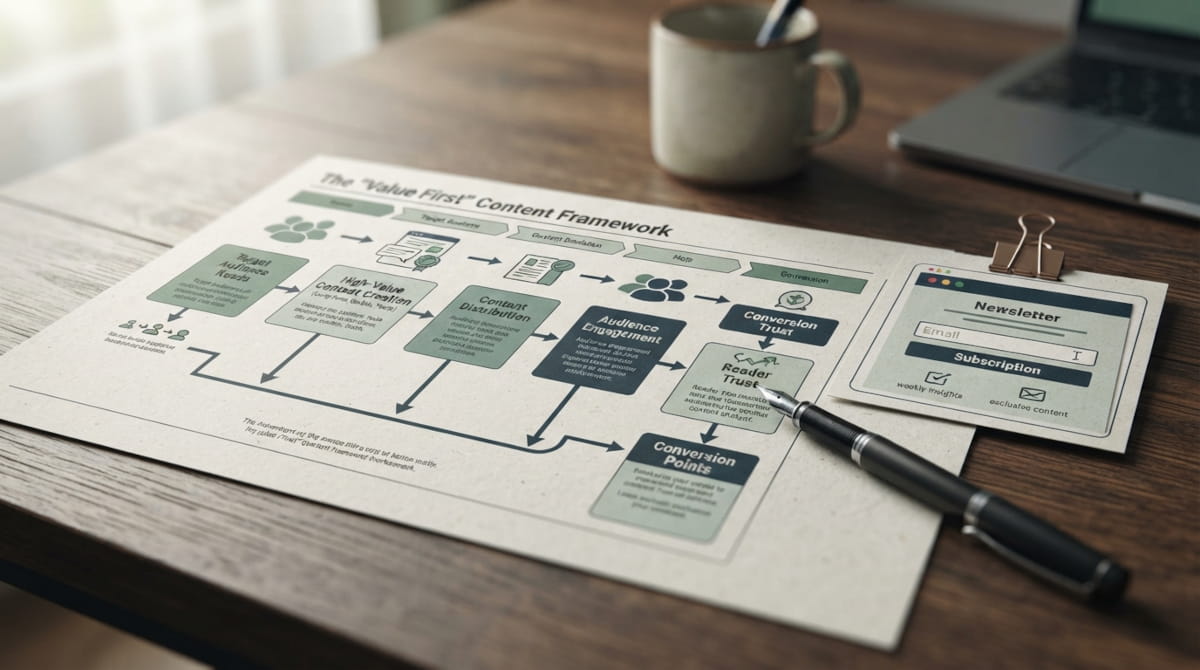
Turning Readers Into Subscribers A Value-First Content Framework
Turning readers into subscribers is built on trust. The problem is that the internet is full of software reviews written by people who have never actually used the products they’re recommending; their content is built to chase clicks instead of trust.
The vendor wins 80% of B2B deals the buyer favoured before first contact, which is why this framework is designed to turn readers into subscribers, not just chase page views.
Key Takeaways
| What you do | What it creates | Why it works |
|---|---|---|
| Lead with value, not promotions. | Faster trust, clearer relevance. | Works because buyers decide early. |
| Use a clear content path to a subscriber offer. | More signups from the same readers. | Better alignment beats louder posts. |
| Build your audience with consistency. | Retention and long-term income. | “One-and-done” content underperforms. |
| Choose traffic sources that actually convert. | Subscribers, not just visits. | Channel quality matters more. |
| Prepare for monetisation when the audience is ready. | Higher conversion without feeling pushy. | People pay when value is proven. |
| Turn “content marketing” into a content plan. | Repeatable growth for your Online Business. | Clarity beats chaos. |
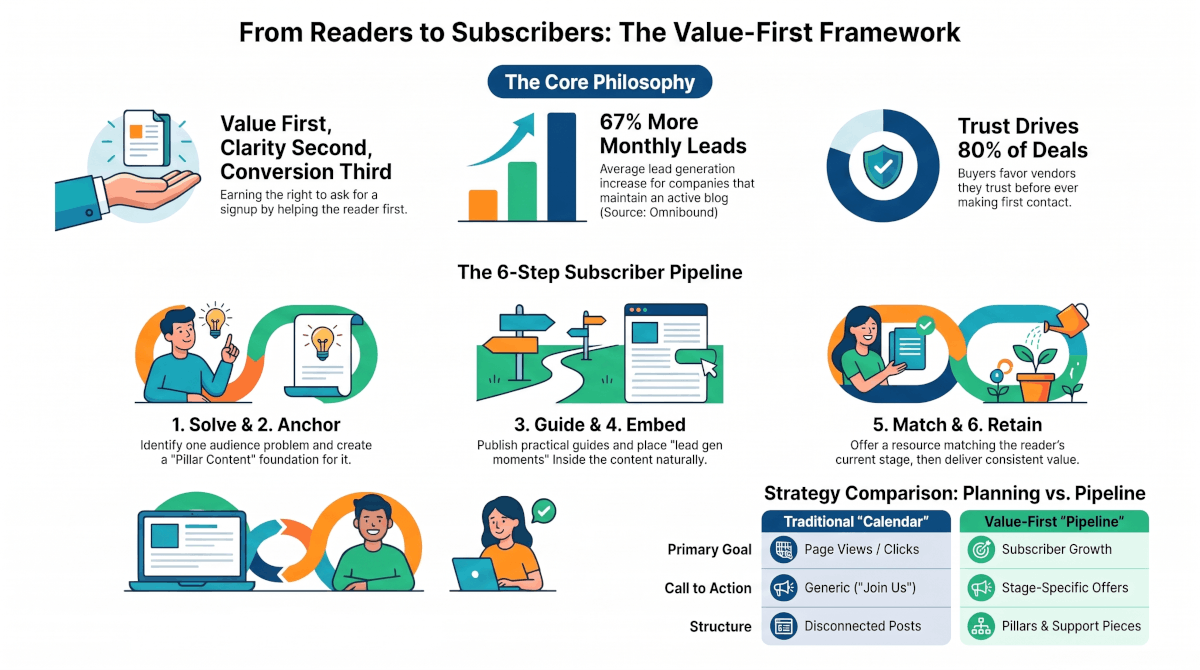
The Value-First Framework at a glance: six steps, one philosophy turn readers into subscribers without losing their trust.
Why value-first content wins (and why "publish more" fails)
Unfortunately, much of the advice online is outdated, biased, or designed simply to sell the next “must-have” product. Readers have more choices than ever, and they can feel when content is written to win an argument instead of helping them solve a real problem.
Here’s the core shift: this framework is not about stuffing every post with a call to action. It’s about earning the right to ask for a sign-up because you already helped.
We believe building an online business isn’t about chasing quick wins or “get rich quick” schemes. It’s about creating something real, serving customers, and growing steadily with practical strategies your readers can actually apply.
- Value first means your reader learns something useful before you ask for anything.
- Clarity second means your content shows how your offer solves the next step.
- Conversion third means your subscriber path feels like continuity, not pressure.
Did You Know?
67% more leads are created monthly by companies that maintain an active blog.
Source: Omnibound
6 Steps to Turn Readers Into Subscribers (the Value First Framework)
Technology, especially Artificial Intelligence, is changing how businesses are built, but the fundamentals remain the same. Your job is simple: create value, earn trust, then make the next step obvious.
We lay it out as a subscriber journey you can repeat. If you’re asking, “How to build an online business with a content marketing strategy that actually converts,” this is the structure.
- Choose one audience problem you can help with better than anyone else can right now.
- Create a content pillar (your “big idea”) that ties to how your readers make decisions.
- Publish value-first content marketing content that supports the pillar with practical guides.
- Build lead generation content marketing moments inside the content (without interrupting the reader).
- Convert with an offer that matches the exact stage your reader is in.
- Retain with consistent delivery, then grow toward monetisation when it’s earned.
Build a Content Plan Turning Readers Into Subscribers

Most creators treat a content plan like a calendar. We treat it like a pipeline for your Online Business.
People want consistency, but they also want relevance. Your content strategy should show up in the same places your readers already feel the problem.
What your content plan must include
- A pillar content idea (the topic you’ll keep expanding over time).
- Supporting pieces for each common question your reader asks.
- Subscriber entry points that fit each stage (new reader, learning stage, ready stage) — a simple email opt-in still drives more real email subscriber growth than a generic “join our newsletter” button.
- Proof of usefulness like examples, checklists, and clear “do this next” steps.
Where “content pillar” and “pillar content” fit
A content pillar is the foundation. Pillar content is the page or set of pages that keeps answering the main question as you add depth. From there, you publish content strategy pieces that connect directly back to the next step a reader needs.
Turn content creation services logic into your own system (without hype)
Some people think they need “content creation services” to get results. You can still get the same disciplined workflow without paying for outside output, as long as you build a repeatable creation system.
Here’s what we look for when we help someone build and grow an online business: clarity, usefulness, and honest guidance. If you see content that promises overnight success, be careful. We want content that helps you serve customers, not content that just sells another tool.
- Write for the reader’s next action, not for your future self.
- Include usable formats (steps, templates, checklists, examples).
- Use AI as a tool, not a replacement for judgment, creativity, or experience.
- Test your ideas with your audience, then refine your content plan as you learn.
Keeping your reviews and recommendations grounded matters just as much. The internet is full of software reviews written by people who have never actually used the products they’re recommending. We don’t do that.
Choose The Right Traffic Sources
If you pour time into content marketing but your traffic doesn’t fit your reader, you will feel like your effort disappears. It’s not your writing it’s the audience you’re attracting.
That’s why we focus on practical traffic sources that support a value-first approach, then help your readers move forward.
Focus on channels that fit your Traffic Sources That Actually Convert a grounded way to allocate resources toward channels that drive subscriber growth.
Quick rule we use: If the channel cannot attract people who care about solving the problem your content answers, don’t force it. Build your Online Business on alignment.
Common value-first traffic paths
- Content marketing content that matches reader intent, including “what is” explanations.
- Lead generation content marketing that offers a real next step (not a generic newsletter).
- Repurposing that keeps the same promise across formats, so readers recognise value immediately.
- Community and user-generated content marketing where your audience shares the outcome, not the hype.
Monetise without breaking trust: subscriber paths, offers, and readiness.

When your readers are used to value, monetisation feels natural but when your content is mostly promises, it feels like a bait-and-switch.
That’s why this framework treats monetisation as a stage, not the beginning.
In practice, we use a readiness mindset. You can prepare your content and offers so your subscriber journey doesn’t abruptly change tone.
- Ready to Monetise is about aligning your content value with subscriber-focused monetisation paths.
- Monetise means turning engaged readers into paying subscribers or customers, using pricing and value propositions that match what you’ve already proven.
Use Ready To Monetise when you want a checklist approach to launch paid offerings, then revisit those principles for strategy that stays tied to audience relationships.
Practical Examples: How to Turn Readers Into Subscribers
Let’s make this concrete. Below are content patterns you can apply immediately to help you build an online business that compounds.
Example 1: “What this is” post that ends with a real next step
If your reader searches “content marketing what is,” don’t just define terms. Give them a short content framework they can use today, then invite them to a subscriber resource that continues the plan.
Value-first structure:
- Explain the concept in plain language.
- Show a mini content plan (3-5 steps).
- List common mistakes that waste time.
- Offer a subscriber guide that expands the mini plan into a usable system.
Example 2: “Traffic sources” guide that matches subscriber intent
People searching “content marketing lead” are ready to move. Your job is to connect the traffic channel to the exact offer stage.
Conversion without pressure:
- Match channel to reader intent (learning vs ready).
- Show what “good results” look like for that stage.
- Invite subscribers to receive the next checklist in the sequence.
Example 3: Honest reviews that become subscriber magnets
Our mission is simple: to help people build, grow and automate a genuine online business using trusted advice, practical strategies and the best tools available.
If you write honest reviews you can trust, your readers subscribe because they trust your judgement. That’s why we treat recommendations ethically, including our rule: If we earn a commission through an affiliate link, it never influences our opinion.
Conclusion: Turn Readers Into Subscribers Every Week
Turning readers into subscribers isn’t about a clever call-to-action button. It’s the natural result of consistently giving people something worth coming back for.
Lead with value, build a content pillar you can keep expanding, and let each piece guide readers toward a subscriber offer that matches where they actually are not where you wish they were. Do that consistently, and monetisation stops feeling like a pitch. It becomes the next honest step in a relationship you’ve already earned.
Frequently Asked Questions
What is The ‘Value First’ Content Framework: Turning Readers Into Subscribers?
The ‘Value First’ Content Framework: Turning Readers Into Subscribers is a content marketing strategy that earns signup intent by delivering real value before you ask for anything. You build a content pillar, publish supporting content, guide readers to a subscriber offer, then retain them with consistent delivery.
How do I turn readers into subscribers?
Use this framework by aligning each piece of content to a specific reader stage and offer. Add subscriber entry points that match what they need next, then follow up with a simple, consistent email sequence.
What does a content pillar and pillar content mean for an online business?
A content pillar is the main topic foundation for your content strategy, and pillar content is the expanding set of pages that keep answering the core question over time. With this framework, each supporting post naturally links readers toward a subscriber-ready next step.
Is content marketing content enough to generate leads and subscribers?
Content marketing content is the foundation, but this framework requires a path from learning to subscribing. Pair your guides with a clear offer that continues the value, and use a content plan so readers see continuity.
How can I build an online business if my traffic sources don’t convert?
Re-check whether the channel matches your audience problem and subscriber stage. Use this framework to prioritise traffic sources that bring people who want the next step, not just extra visits.
When should I monetise content if my goal is subscribers?
Monetise when your audience recognises your value and trusts your judgment. With this framework, you prepare monetisation paths in advance so your offers feel like the natural continuation of what you taught.
How do I use AI in content creation without hurting trust?
AI is a tool, not a replacement for creativity, experience or good judgement. This framework works best when AI speeds drafts, while you keep responsibility for accuracy, usefulness, and honest recommendations.
